


As a supplier of Non Ionic Polyacrylamide, I've witnessed firsthand the dynamic nature of the industry and the ever - evolving research trends surrounding this remarkable polymer. In this blog, I'll delve into the latest research trends for Non Ionic Polyacrylamide, exploring its applications, emerging studies, and potential future directions.
1. Water Treatment Applications
Non Ionic Polyacrylamide Non Ionic Polyacrylamide has long been a staple in water treatment processes. Recent research has focused on enhancing its efficiency in removing various contaminants from water. One of the key trends is the optimization of its flocculation properties. Scientists are studying how to adjust the molecular weight and charge density of Non Ionic Polyacrylamide to improve its ability to bind with suspended particles, colloids, and organic matter in water.
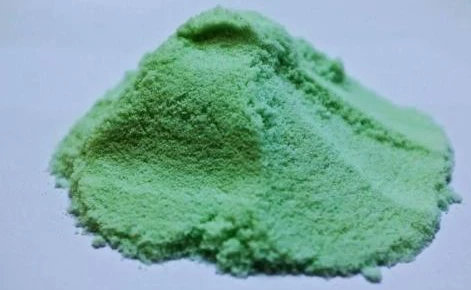
For instance, in wastewater treatment plants, researchers are exploring the use of Non Ionic Polyacrylamide in combination with other chemicals such as Organic Ferrous Sulfate. The combination can lead to more effective coagulation and flocculation, resulting in better water clarification and reduced sludge volume. This approach not only improves the overall treatment efficiency but also reduces the cost associated with water treatment.
Another area of research in water treatment is the application of Non Ionic Polyacrylamide in membrane filtration processes. Membrane fouling is a significant challenge in water treatment, and Non Ionic Polyacrylamide has shown potential in reducing fouling by forming a protective layer on the membrane surface. Studies are underway to understand the mechanisms behind this anti - fouling effect and to develop more effective strategies for its application.
2. Enhanced Oil Recovery
In the oil and gas industry, Non Ionic Polyacrylamide plays a crucial role in enhanced oil recovery (EOR). The latest research trends in this area are centered around improving the polymer's performance under harsh reservoir conditions. Reservoirs often have high temperatures, high salinity, and high shear rates, which can degrade the polymer and reduce its effectiveness.
Researchers are developing new formulations of Non Ionic Polyacrylamide that are more resistant to these harsh conditions. For example, by modifying the polymer's chemical structure, they can increase its thermal stability and salt tolerance. This allows the polymer to maintain its viscosity and mobility in the reservoir, thereby improving the sweep efficiency and oil recovery factor.
In addition, studies are being conducted to understand the interaction between Non Ionic Polyacrylamide and the reservoir rock. By understanding these interactions, engineers can optimize the injection strategy and design more effective EOR processes. This includes determining the optimal polymer concentration, injection rate, and injection pattern to maximize oil recovery.
3. Soil Conditioning and Agriculture
Non Ionic Polyacrylamide also has applications in soil conditioning and agriculture. Recent research has focused on its ability to improve soil structure, water retention, and nutrient availability. When applied to soil, Non Ionic Polyacrylamide can bind soil particles together, creating aggregates that improve soil porosity and permeability.
This enhanced soil structure allows for better water infiltration and reduces soil erosion. In addition, Non Ionic Polyacrylamide can help to retain water in the soil, reducing the need for frequent irrigation. This is particularly important in arid and semi - arid regions where water resources are limited.
Moreover, research is being done on the use of Non Ionic Polyacrylamide to enhance nutrient uptake by plants. The polymer can interact with soil nutrients, preventing their leaching and making them more available to plants. This can lead to improved crop yields and better overall plant health.
4. Biomedical Applications
Although still in the early stages of research, Non Ionic Polyacrylamide shows promise in biomedical applications. Some studies are exploring its use as a drug delivery system. The polymer can be formulated into nanoparticles or hydrogels that can encapsulate drugs and release them in a controlled manner.
For example, in cancer treatment, Non Ionic Polyacrylamide - based drug delivery systems can target tumor cells more effectively, reducing the side effects associated with traditional chemotherapy. The polymer's biocompatibility and low toxicity make it an attractive candidate for such applications.
Another area of research in biomedicine is the use of Non Ionic Polyacrylamide in tissue engineering. The polymer can be used to create scaffolds that mimic the extracellular matrix, providing a support structure for cell growth and tissue regeneration.
5. Environmental Impact and Sustainability
With the increasing focus on environmental protection and sustainability, research on Non Ionic Polyacrylamide is also addressing its environmental impact. Scientists are studying the degradation of the polymer in the environment and developing strategies to minimize its long - term effects.
One approach is to develop biodegradable Non Ionic Polyacrylamide formulations. By incorporating biodegradable monomers into the polymer structure, researchers aim to create polymers that can break down naturally in the environment, reducing their accumulation and potential harm.
In addition, research is being done on the life - cycle assessment of Non Ionic Polyacrylamide production and use. This includes evaluating the energy consumption, greenhouse gas emissions, and waste generation associated with the polymer's production and application. By understanding these aspects, companies can develop more sustainable production and use practices.
6. Future Directions
Looking ahead, the research on Non Ionic Polyacrylamide is likely to continue to expand in multiple directions. In water treatment, we can expect to see more advanced formulations that are tailored to specific types of contaminants and water sources. The combination of Non Ionic Polyacrylamide with other advanced treatment technologies, such as advanced oxidation processes, may also become more common.
In the oil and gas industry, further research will be focused on developing polymers that can perform even better under extreme reservoir conditions. This may involve the use of novel chemical modifications and the development of new synthesis methods.

In the agricultural and biomedical fields, the potential applications of Non Ionic Polyacrylamide are vast. We can anticipate more research on optimizing its use in soil conditioning and crop production, as well as the development of new biomedical applications.
As a supplier of Non Ionic Polyacrylamide, I'm excited about these research trends and the opportunities they present. We are committed to staying at the forefront of these developments and providing our customers with the highest - quality products. If you are interested in learning more about Non Ionic Polyacrylamide or have specific requirements for your application, please don't hesitate to contact us for a detailed discussion and potential procurement.
References
- Smith, J. et al. "Advances in Non Ionic Polyacrylamide for Water Treatment." Journal of Environmental Science, 2022.
- Johnson, R. "Enhanced Oil Recovery Using Non Ionic Polyacrylamide: Current Trends and Future Prospects." Oil and Gas Journal, 2023.
- Brown, A. "Soil Conditioning with Non Ionic Polyacrylamide: A Review." Agricultural Research, 2021.
- Green, M. et al. "Biomedical Applications of Non Ionic Polyacrylamide." Biomaterials Science, 2022.


